



Hundreds set off on new migrant caravan
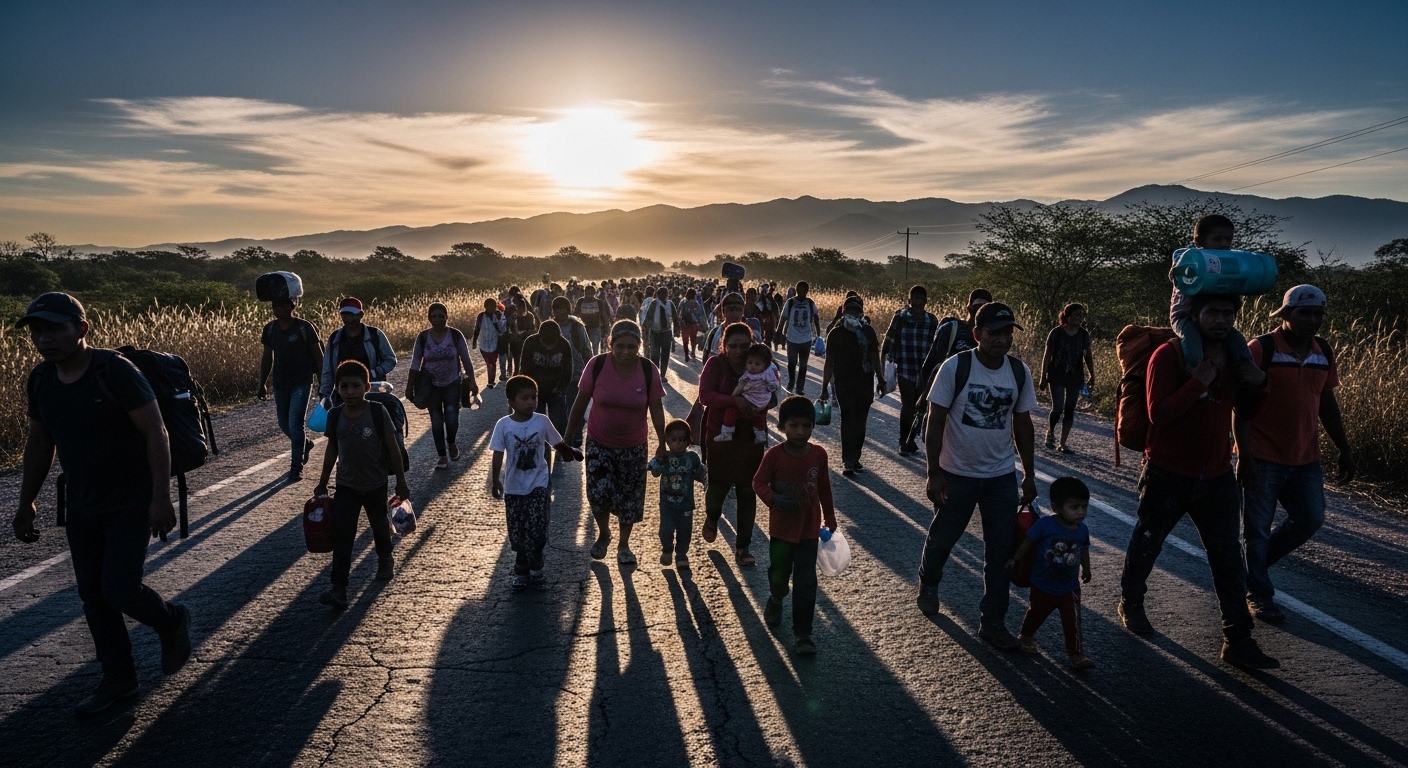
Hundreds of migrants from Central America have set off on a new caravan heading north through Mexico toward the United States border, continuing a pattern that has become one of the defining humanitarian stories of recent years. The latest group, composed largely of Hondurans and Salvadorans fleeing gang violence, extreme poverty, and political instability, gathered at the Guatemala-Mexico border crossing before crossing the Suchiate River and pressing into southern Mexico. Mexican authorities deployed soldiers and national guardsmen to the southern border ahead of the caravan’s arrival.
The decision to travel in large organised groups — caravans — is a deliberate strategy born out of danger and necessity. For individual migrants, the journey through Mexico is extraordinarily perilous: gang extortion, kidnapping, violence at the hands of traffickers, and exploitation by criminal organisations are constant threats. In a large, visible group, migrants have some protection through sheer numbers, and their situation is more likely to attract media attention and humanitarian support. Organisations like Oxfam and Pueblo Sin Fronteras have played key roles in coordinating logistics and providing basic humanitarian assistance along the route.
The political context surrounding these caravans has become intensely polarised. In Washington, the Trump administration has consistently framed the caravans as a security threat and a deliberate attempt to overwhelm US immigration systems, slashing aid to Central American countries and putting pressure on Mexico to stop migrant flows before they reach the US border. After two caravans successfully reached the border in 2018 and early 2019, Mexico began deploying its newly formed National Guard to its southern frontier — a shift critics say has led to human rights abuses and arbitrary detention.
On the ground, the reality is more complex and more human. Families with small children, elderly individuals, and young people fleeing gang recruitment walk for hours in intense heat, sleeping in makeshift shelters, dependent on the generosity of strangers. Human rights organisations document case after case of credible fear — from domestic violence to threats by organised crime to state repression. Over 90 per cent of caravan members who underwent credible fear screenings in the US have been found to have valid claims for asylum protection. The question of what to do about these caravans is ultimately a question of what wealthy nations owe to people fleeing places they have had a hand in destabilising.