


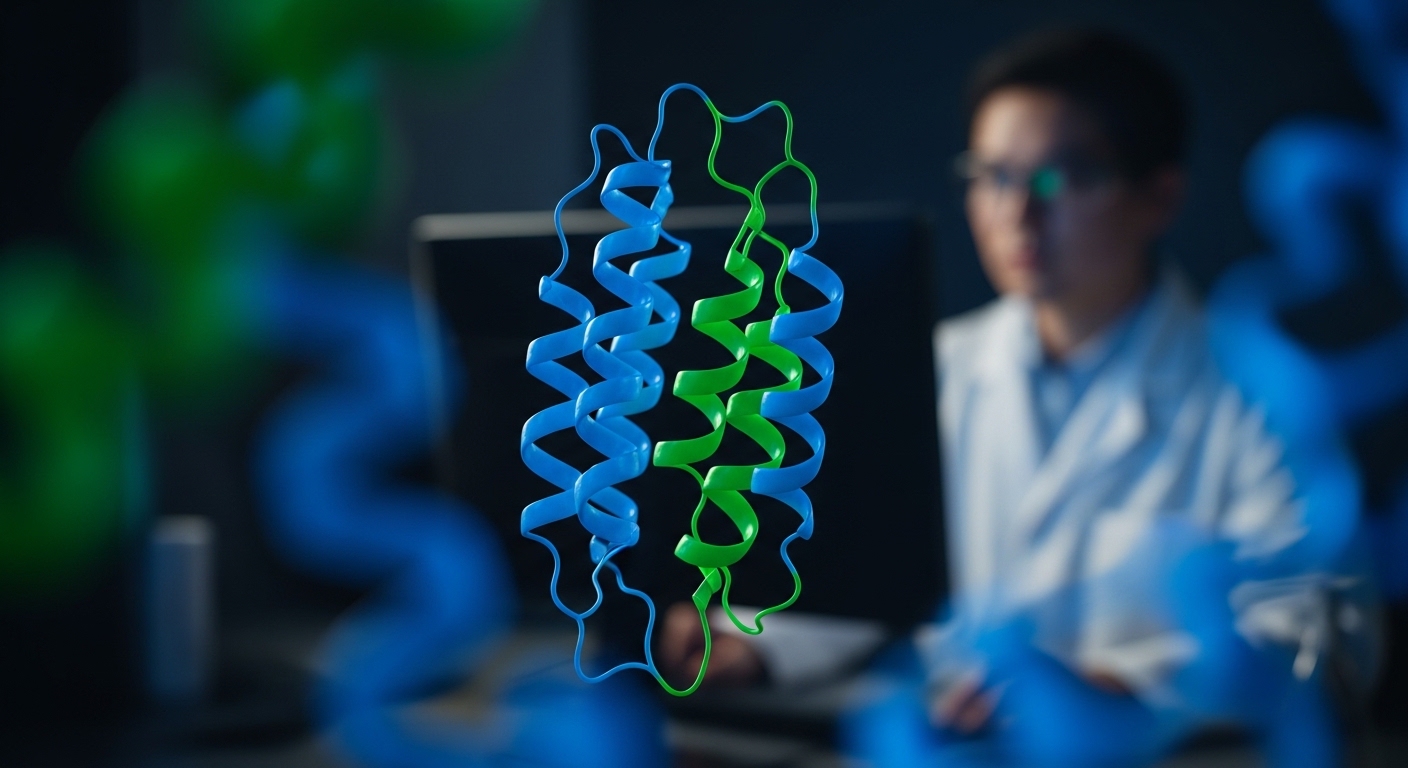

DeepMind Cracks the Protein Folding Problem — and Changes Biology Forever
In November 2020, Google’s artificial intelligence research lab DeepMind announced that its AlphaFold2 system had achieved something biologists had been trying to accomplish for more than fifty years: accurately predicting the three-dimensional shape of proteins from their amino acid sequences. The announcement came at the Critical Assessment of Protein Structure Prediction competition, the biennial Olympics of computational biology, where AlphaFold2 achieved scores so far above every other competitor that many scientists initially wondered if there had been a mistake. There had not. The protein folding problem, one of the grand challenges of modern science, had effectively been solved.
Understanding why this matters requires a brief detour into biology. Proteins are the molecular machines that carry out virtually every function in a living cell — from digesting food to fighting infection to reading DNA. They are built from chains of amino acids that fold, with extraordinary precision, into specific three-dimensional shapes, and it is the shape of a protein that determines what it can do. For decades, determining this shape required painstaking and expensive experimental methods — X-ray crystallography, cryo-electron microscopy — that could take months or years per protein. With roughly 200 million distinct proteins existing in nature, the scale of the problem was staggering.
AlphaFold2 changed the arithmetic entirely. Within a year of its breakthrough, DeepMind released predictions for the structures of nearly every protein known to science — approximately 200 million structures — freely available to researchers worldwide through an open database built in partnership with the European Bioinformatics Institute. The database was downloaded by researchers in 190 countries within weeks of launch. Scientists working on malaria, Parkinson’s disease, antibiotic resistance, and dozens of other critical challenges immediately began using the data to accelerate their work.
The implications for medicine and drug discovery are profound. Historically, identifying a drug molecule that fits precisely into a protein’s active site required enormous trial and error. With accurate protein structures freely available, researchers can now computationally screen millions of potential drug candidates against known protein targets in a fraction of the time. AlphaFold2 has been described by Nobel laureate Venki Ramakrishnan as a once-in-a-generation advance — one of those rare moments when a single breakthrough genuinely accelerates the pace of discovery across an entire scientific field.