



NASA’s Perseverance Rover Lands on Mars — and Makes History
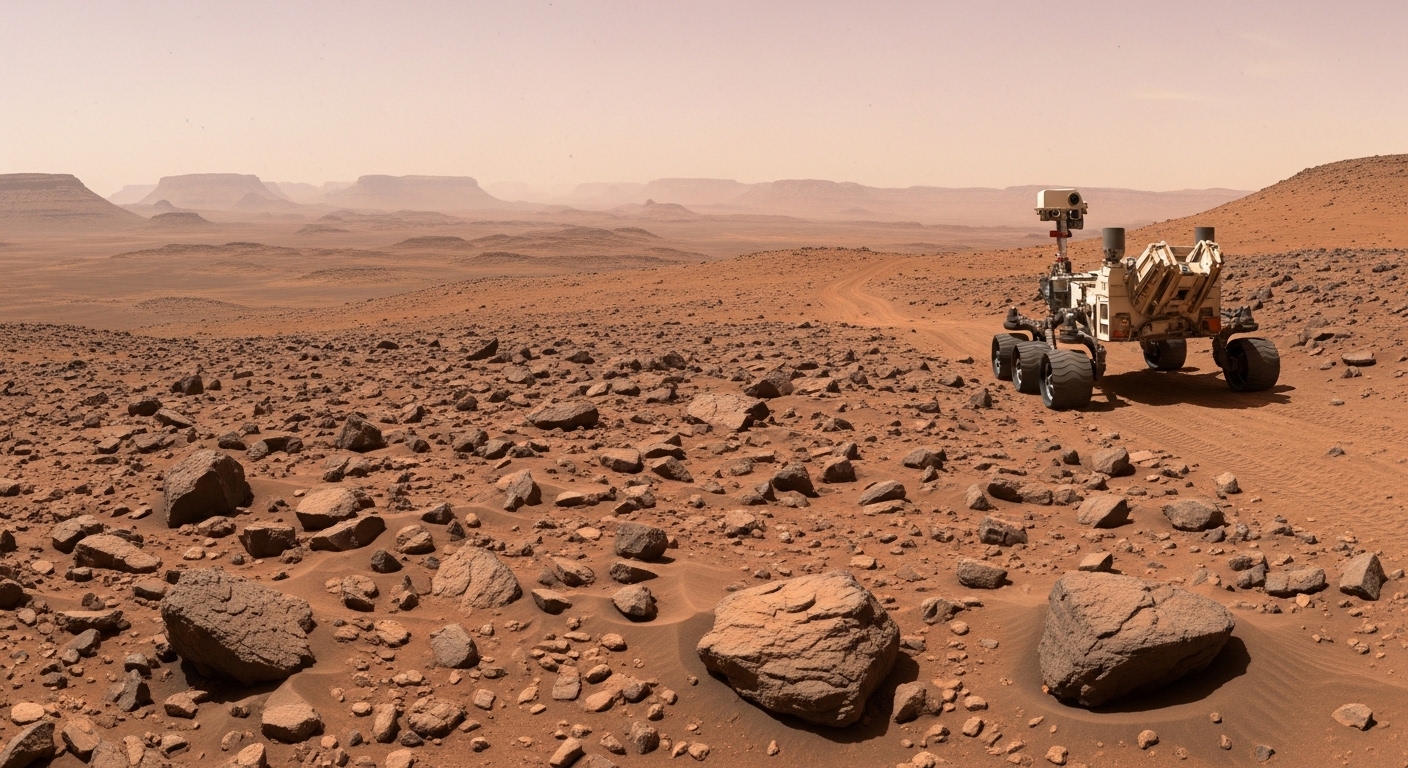
At 3:55 pm Eastern Time on February 18, 2021, a one-tonne, car-sized robotic science laboratory called Perseverance touched down in Jezero Crater on the surface of Mars — and the room at NASA’s Jet Propulsion Laboratory erupted. Engineers who had spent years building and worrying about the spacecraft leapt from their workstations, threw their arms in the air, and wept. The landing, which required the spacecraft to decelerate from 12,000 miles per hour to zero in seven minutes using a heat shield, parachute, retrorockets, and a sky crane system, had worked flawlessly. Perseverance was alive.
The mission’s primary scientific objective is the one that has haunted Mars exploration since the dawn of the space age: the search for signs of ancient microbial life. Jezero Crater was chosen because, 3.5 billion years ago, it was a lake fed by a river delta — a watery environment in which, on Earth, life would almost certainly have thrived. Perseverance carries instruments designed to analyse rocks and sediments in extraordinary detail, looking for biosignatures — chemical or structural patterns that could only have been produced by living organisms. Crucially, the rover is also collecting and caching rock core samples to be returned to Earth by a future mission, where they can be analysed with far more powerful laboratory equipment.
Perseverance also made history in a different dimension. On April 19, 2021, a small helicopter attached to the rover called Ingenuity made the first powered, controlled flight by any aircraft on another planet. The 39-second hop reached a height of 3 metres — a brief but profoundly significant moment. Mars’s atmosphere is only about 1 per cent as dense as Earth’s, meaning the helicopter’s rotors had to spin at around 2,500 revolutions per minute, roughly five times faster than on Earth. Engineers had spent years just figuring out if powered flight on Mars was physically possible.
In the months since landing, Perseverance demonstrated oxygen production from the Martian atmosphere using an instrument called MOXIE — a proof of concept for technology that could one day support human exploration. It has taken thousands of photographs and collected its first scientific core samples. The mission, budgeted at approximately $2.7 billion, is described by scientists as the most capable rover ever sent to another world — and it has barely begun its work.